


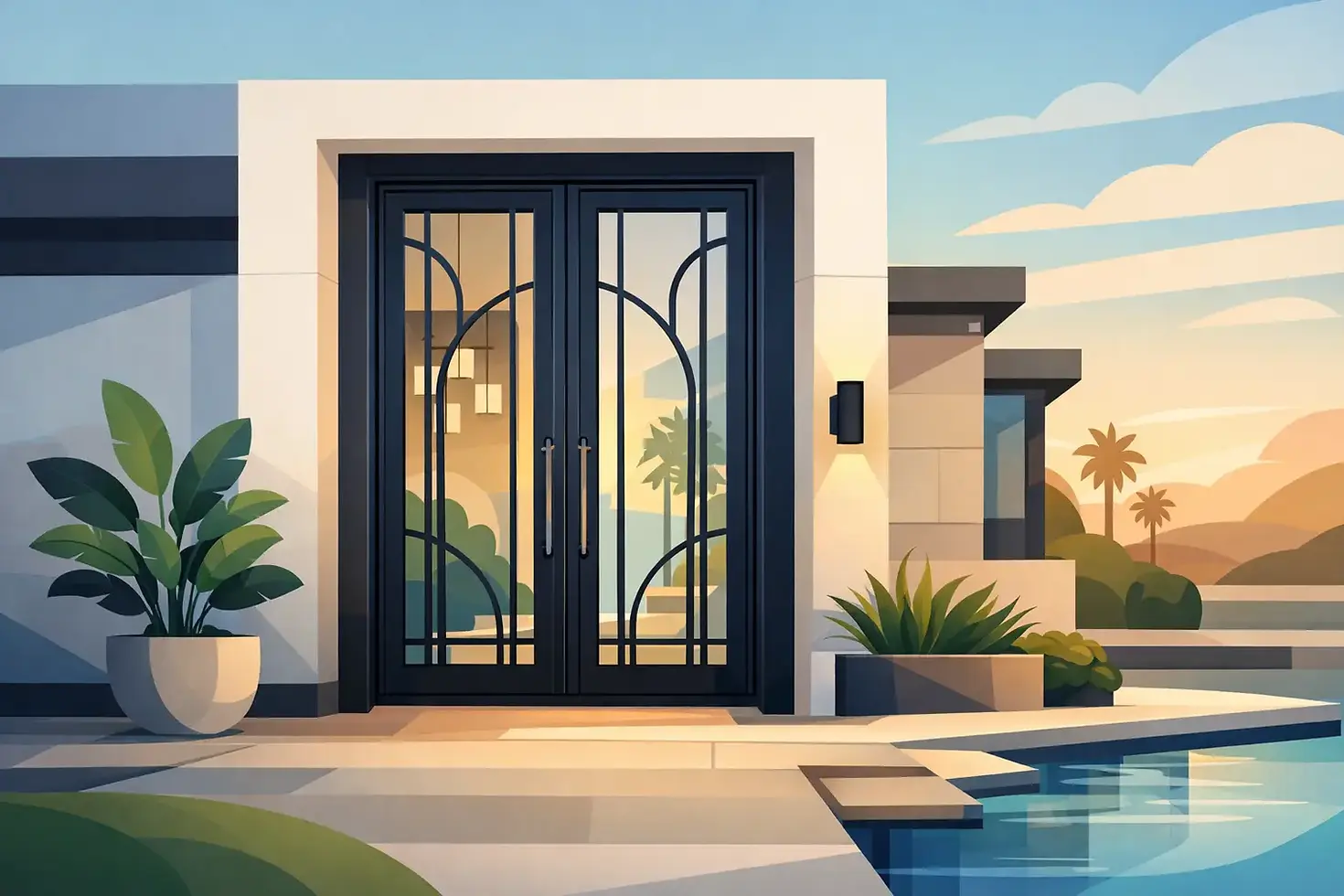
Custom Contemporary Iron Doors That Define a Home
A front door is the first architectural moment your guests experience up close. It frames the arrival, sets the tone for the interiors beyond it, and carries the daily work of protecting your home. Custom contemporary iron doors bring all three roles together in one enduring statement - clean-lined, substantial, and made specifically for the way your home is designed.
For a new build, the right door can establish the visual language of the entire facade. For a renovation, it can replace an ordinary entry with a centerpiece that feels intentional rather than added on. The difference is not simply choosing a dark metal door. It is choosing proportion, glass, hardware, and construction details that belong to your home.
Why Custom Contemporary Iron Doors Feel Different
Contemporary design is often described as minimal, but minimal does not mean plain. A well-designed metal door depends on disciplined details: balanced sightlines, purposeful glass placement, refined profiles, and enough visual weight to anchor the entry without overwhelming it.
Custom work makes those decisions possible. A standard-size door may be convenient, yet it can leave awkward filler panels, undersized glass, or proportions that do not suit a tall foyer and expansive facade. When a door is built to your opening, its scale can respond to the architecture around it. A wide single door with sidelights, a pair of slim French doors, or an oversized pivot door each creates a very different experience.
The material also brings a depth that painted wood and mass-produced fiberglass cannot fully replicate. Handcrafted iron and steel offer crisp geometry, lasting strength, and a finish that gives contemporary architecture a grounded, permanent quality. The result can be dramatic, but it should never feel disconnected from the home.
Start With the Architecture, Not a Door Style
The best design conversation begins outside the entry. Look at the home as a whole: rooflines, stone or stucco color, window proportions, porch depth, and the amount of natural light at the front of the house. These cues narrow the right direction quickly.
A low, horizontal home often benefits from a wide entry composition. Double doors or a single oversized door with narrow sidelights can reinforce that calm, expansive shape. A taller facade may call for vertical glass panels, a transom, or a pivot door that draws the eye upward.
Color matters, too. Black remains a classic choice because it gives modern glass and metal a clean edge. Yet dark bronze, charcoal, and custom finishes can feel softer against warm limestone, brick, or natural wood. The goal is not to match every exterior material. It is to create a relationship between them.
Glass is part of the design language
Glass determines how open, private, and luminous the entry feels. Clear glass offers the most direct view and brings in abundant daylight, making it a natural fit for private lots or homes with a strong interior focal point. Frosted, rain, or textured glass can soften views while retaining light. Tinted options may be especially appealing where sun exposure is intense.
There is a trade-off. More glass creates a lighter, more open composition, while more metal typically increases privacy and visual solidity. Neither is automatically better. Consider the street, the orientation of the home, and what you want to see from inside when you return each day.
Choosing the Right Door Configuration
A contemporary door should suit how your household actually moves through the home. The front entry is only one opportunity. Coordinated patio, sliding, bi-fold, and interior barn doors can extend the same design language throughout the property.
Single and double entry doors
A single custom door can be striking when it has generous height, a strong vertical handle, and carefully placed glazing. It is often the best choice for a refined entry where restraint is part of the architecture. Double doors add ceremony and width, particularly for grand foyers, larger covered porches, and homes that regularly welcome family and guests.
The center meeting point of double doors deserves attention. Symmetrical panels can feel formal and architectural, while an asymmetrical active-and-fixed configuration may better suit a modern home with an off-center layout.
Pivot doors
Pivot doors are designed to make an impression through scale and motion. Rather than hinging from the edge, the door rotates on a pivot system positioned inward from the frame. This allows for larger, heavier door slabs and a distinctive floating appearance.
They are especially compelling on modern homes with tall ceilings and wide entry openings. But a pivot door is not simply an aesthetic upgrade. Proper clearance, structural support, weather exposure, and the way the door will operate in wind all need to be considered during planning. A knowledgeable custom door team can help determine whether a pivot system is right for the opening.
Patio and indoor-outdoor openings
For patio doors, the priorities often shift toward views, daylight, and traffic flow. Sliding or bi-fold configurations can connect a living room to an outdoor kitchen or pool area while preserving the same slim, contemporary metal profile used at the entry. The most successful approach is often coordinated rather than identical: the front door can be more private and sculptural, while rear doors open wide to the landscape.
Details That Make a Door Feel Truly Custom
Size gets attention first, but the finishing choices are where a door becomes personal. The grid pattern can be almost invisible, with a few large panes of glass, or more graphic, with narrow vertical divisions. A horizontal design may echo wide-format stone and low rooflines. A vertical layout can add height to a modest entry.
Hardware should be treated as part of the composition, not an afterthought. A long pull handle adds a tailored, architectural line to a pivot or tall single door. Lever sets can feel more classic and familiar. Coordinated locks, handles, and finishes give the completed entry a considered look while supporting the security your home requires.
Finish selection also deserves a real conversation. A matte dark finish may be the right contemporary choice for one exterior, while another home calls for a warmer, subtly textured tone. Samples and renderings are helpful, but viewing the finish against the actual exterior materials and changing Texas light is often the best way to decide.
Security and Performance Belong in the Same Conversation
A statement door still needs to perform every day. Metal construction offers inherent strength, but security is shaped by the entire assembly: the frame, locking system, glass selection, installation, and fit within the opening. A beautiful door should close confidently, lock smoothly, and feel substantial in use.
Energy performance is equally dependent on the complete door system. Large glass areas can invite welcome daylight, but they must be specified thoughtfully for the climate and exposure. Homes facing hard afternoon sun may have different needs than shaded entries. Ask about the glass, weather sealing, threshold, and construction options recommended for your location instead of assuming one configuration works everywhere.
This is where custom fabrication has practical value. Exact measurements and a well-planned installation reduce the compromises that can come with trying to make an off-the-shelf door fit an architectural opening it was never designed for.
A Better Way to Approach the Design Process
Bring inspiration, but do not feel pressured to arrive with every answer. A few exterior photos, opening measurements, floor plans, or images of doors you admire can begin a productive consultation. From there, the important questions become clear: What should the entry communicate? How much privacy do you need? Which materials should the door complement? Is the opening suited to a hinged, double, or pivot configuration?
At Babylon Iron Doors, that conversation can begin with an established contemporary design or a fully bespoke concept. The value of close collaboration is not having more choices for their own sake. It is having a team help turn the right choices into a door that fits the home, the opening, and your vision.
A custom door is a long-term architectural decision, so allow time for design, fabrication, and installation coordination. Confirm dimensions early, especially if the surrounding stonework, flooring, or framing is still in progress. The more the door is considered alongside the construction schedule, the more natural the final result will feel.
When you stand at the curb, your entry should not look like the last item selected for the house. It should feel as though the home was designed around it - secure, beautifully proportioned, and unmistakably yours.


Comments